


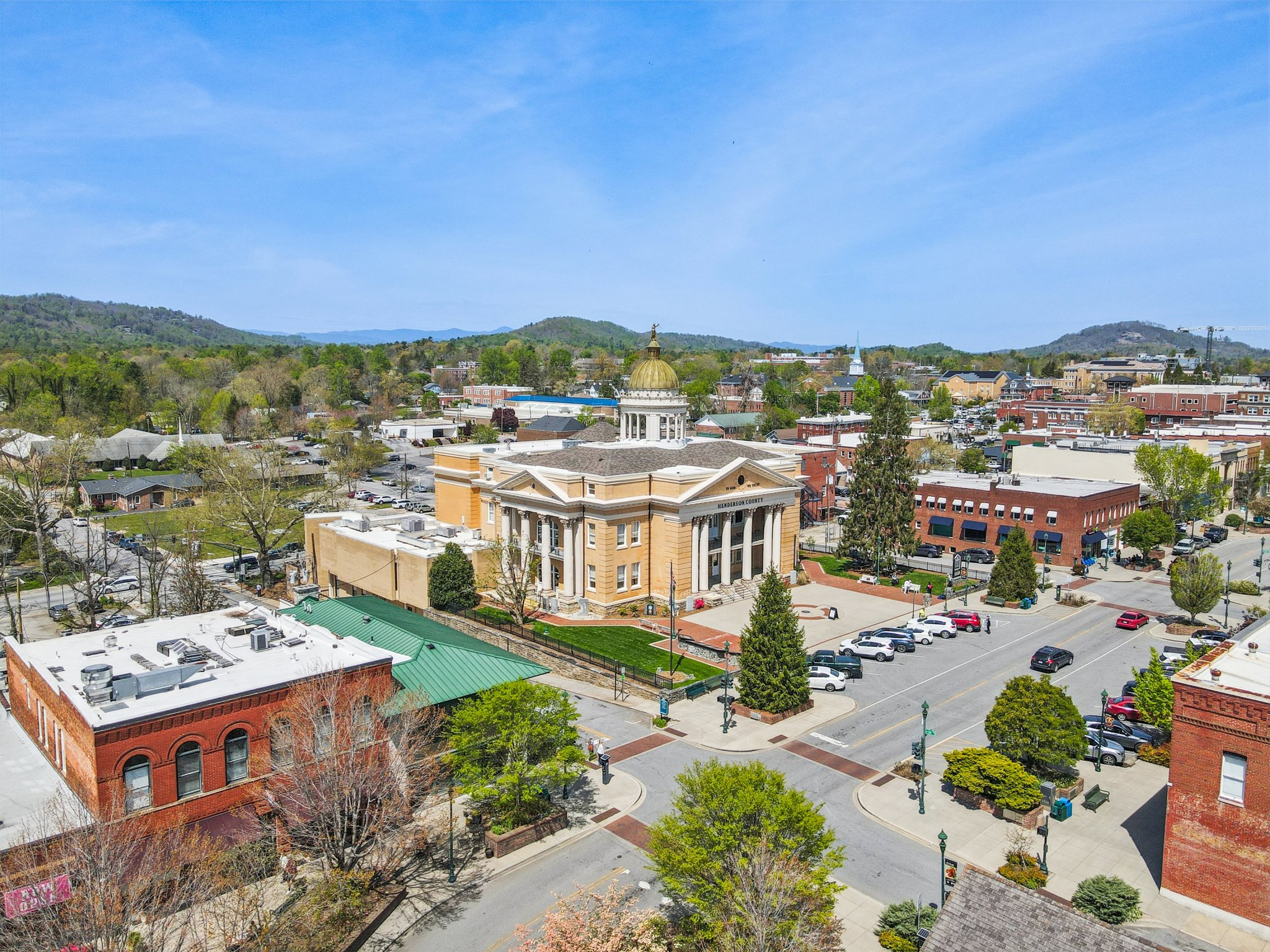
North Carolina attracted more people from other U.S. states than any other state in the latest Census estimates. But that does not automatically mean every North Carolina housing market is getting hotter, or that every home in Western North Carolina should be expected to rise in value at the same pace.
That distinction matters for anyone considering a move to Hendersonville, Asheville, or the surrounding Western North Carolina communities.
North Carolina ranked No. 1 for net domestic migration
According to the U.S. Census Bureau's Vintage 2025 population estimates, North Carolina gained an estimated 84,064 residents through net domestic migration between July 2024 and July 2025. Net domestic migration measures the difference between people moving into a state from elsewhere in the United States and people moving out to another state.
North Carolina also added approximately 145,907 residents overall during that period, bringing the state's estimated population to about 11.2 million. That was a 1.3% increase, one of the strongest state growth rates in the country.
The broader trend is clear: North Carolina continues to attract residents from other states. The more useful real estate question is what that statewide movement actually means once you get to Western North Carolina.
Western North Carolina is growing too, but not every area is growing the same way
The Census Bureau estimates Henderson County's population at 122,375 as of July 1, 2025, about 5.2% above its April 2020 estimates base. Buncombe County's 2025 estimate was 277,417, about 3.0% above its 2020 estimates base.
| Area | 2025 Population Estimate | Change From 2020 Estimates Base |
|---|---|---|
| North Carolina | 11,197,968 | About +7.2% |
| Henderson County | 122,375 | +5.2% |
| Buncombe County | 277,417 | +3.0% |
Those numbers do not tell us why every individual household moved, and statewide migration should not be treated as a forecast for a particular neighborhood. But they do support something we continue to see locally: Western North Carolina remains a place people are actively considering for relocation, retirement, lifestyle changes, and second-home ownership.
Does migration mean Hendersonville is automatically a seller's market?
No. Population growth and housing-market leverage are related, but they are not the same thing.
As of November 9, 2026, the Hendersonville MLS city search showed about 593 active residential listings across single-family homes, condos, townhomes, and manufactured homes. About 294 residential properties sold during the previous three months.
That means buyers can have meaningful choice even while the larger region continues to attract new residents.
A market can be growing over the long term while still giving buyers negotiating room in the short term. Inventory, mortgage rates, condition, price, days on market, location, and property type all affect the balance between buyers and sellers.
See the live Hendersonville NC Real Estate Market Report
Why some Western NC properties may feel more competitive than others
Migration does not create equal demand for every property. Buyers moving into Western North Carolina often have specific priorities, and those preferences can concentrate demand in certain segments.
Low-maintenance and one-level living
Retirees and buyers planning for long-term ownership may prioritize main-level bedrooms, limited exterior maintenance, condos, townhomes, and communities where routine maintenance is simplified.
Homes close to everyday services
Being near healthcare, shopping, restaurants, downtown areas, and major roads can matter as much as acreage or mountain views for many relocating buyers.
New construction
Some buyers prefer newer systems, current building standards, and fewer immediate repair concerns. Builder inventory can also create its own negotiating environment, so "new construction" does not automatically mean "no leverage."
Mountain lifestyle properties
Views, privacy, acreage, gated communities, and access to outdoor recreation remain part of Western North Carolina's appeal. But these homes can also involve additional questions about roads, slope, drainage, insurance, wells, septic systems, and maintenance.
That is why we encourage buyers to compare more than price and square footage.
What continued migration could mean for sellers
For sellers, a growing state population is encouraging background information, but it is not a pricing strategy.
The buyer considering your home is also comparing it with today's competing inventory. If similar homes offer better condition, better pricing, fewer immediate repairs, or a more desirable location, statewide migration statistics will not overcome that comparison.
Homes that are well prepared, correctly positioned, and priced with the current competition in mind can stand out. Homes priced primarily from what the market did several years ago can still sit.
The better question for a seller is not "Are people moving to North Carolina?" It is "How does my property compare with what those buyers can purchase today?"
What continued migration could mean for buyers
For buyers, North Carolina's migration trend is a reason to think long term, not a reason to panic.
You do not need to assume that every well-priced home will receive multiple offers or that you should waive sensible protections simply because the state is growing.
Instead, look closely at the individual property:
- How long has it been on the market?
- Has the price already been reduced?
- How does it compare with recent nearby sales?
- How much competing inventory is available?
- Does it have property-specific issues that reduce the buyer pool?
- Are there HOA, road, septic, well, insurance, flood, or topography considerations?
- Is it in a segment where buyers are competing more aggressively?
The answers to those questions matter more to an offer strategy than a national migration headline.
What about Western North Carolina after Hurricane Helene?
One question we still hear is whether people remain interested in Western North Carolina after Hurricane Helene.
The 2025 Census estimates show continued population growth in both Henderson and Buncombe counties compared with their 2020 estimates bases. That does not isolate the effect of Helene or tell us exactly how many people moved in or out because of the storm. It does, however, show that the region's longer-term population picture remains one of growth rather than broad population decline.
For individual buyers, storm history has made property-level due diligence even more important. Flood exposure, drainage, road access, slope stability, repairs, insurance, and documentation should be evaluated based on the specific property rather than broad assumptions about an entire county.
So, is Western North Carolina still attracting buyers?
Yes, but the local housing story is more nuanced than a migration ranking.
North Carolina's No. 1 ranking for net domestic migration is meaningful. Henderson County and Buncombe County have also grown since 2020. At the same time, current inventory can give buyers more options and negotiating room than they had during the fastest pandemic-era market.
Those two things can both be true.
For someone thinking about relocating to Hendersonville or Western North Carolina, that may actually be a healthy combination: long-term demand for the region without every purchase feeling like an auction.
Where to go from here
If you are researching Western North Carolina, these resources can help you move from the statewide headline to the actual local market:
- Frisbee Real Estate Local Intelligence - local market data with practical context.
- Hendersonville NC Real Estate Market Report - live MLS-backed market activity.
- Hendersonville homes for sale - current residential inventory.
- Flat Rock Local Intelligence
- Laurel Park Local Intelligence
- Asheville Local Intelligence
- Explore Western North Carolina communities
Frequently Asked Questions
Which state gained the most residents from other U.S. states in 2025?
North Carolina had the largest net domestic migration gain in the U.S. Census Bureau's Vintage 2025 estimates, adding approximately 84,064 more residents from other states than it lost to other states between July 2024 and July 2025.
Is Henderson County, NC growing?
Yes. The Census Bureau estimated Henderson County's population at 122,375 in 2025, about 5.2% above the April 2020 estimates base.
Does population growth mean Hendersonville home prices will automatically rise?
No. Population growth can support long-term housing demand, but home prices are also affected by inventory, mortgage rates, property condition, location, price range, and competing homes. Different segments can move in different directions at the same time.
Is Hendersonville currently a buyer's market?
Broad indicators have become more buyer-friendly than during the fastest recent years, but there is no single answer for every home. Negotiating leverage depends on the specific property, its competition, condition, price history, and demand within that segment.
Thinking about moving to Western North Carolina? Contact Frisbee Real Estate. We are happy to help you compare communities, understand the market, and decide whether a particular property fits what you are trying to accomplish.
Sources: U.S. Census Bureau, Vintage 2025 Population Estimates and QuickFacts for Henderson County and Buncombe County. State net domestic migration figures are from Census Vintage 2025 components-of-change data. MLS figures are from the live Frisbee Real Estate MLS search on November 9, 2026 and will change over time. Population estimates are estimates, not census counts, and are revised with new annual vintages.