


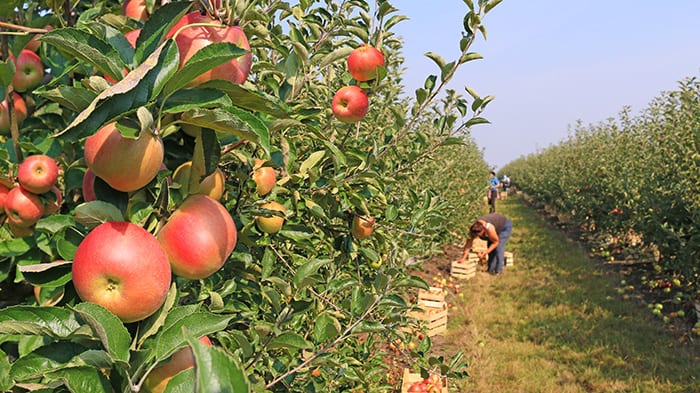
Henderson County voters have approved a $25 million bond aimed at preserving farmland and open space. Nearly 60% of voters supported the measure in the November 2026 election.
The bond is intended to expand the county's existing farmland preservation efforts by purchasing development rights from willing landowners.
That leads to an important question for property owners: Can you sell the development rights to your property without actually selling the land?
Yes. In many cases, that is exactly how farmland preservation works.
What did Henderson County voters approve?
The measure appeared on the November 3 ballot as an open-space preservation bond referendum. The $25 million bond is intended to support Henderson County's farmland preservation program and help protect working farms and agricultural land from future development.
According to a November 5 report from the Hendersonville Lightning, county officials and farmland-preservation advocates are still working through some important administrative questions, including who will administer the funds and what entity will ultimately hold the development rights purchased from participating landowners.
The key point for property owners is that participation is intended to be voluntary. The existing program works with willing landowners who choose to permanently conserve farmland by selling development rights.
What does it mean to sell development rights?
Real estate ownership is often described as a bundle of rights. Those rights may include the ability to occupy the property, farm it, lease it, sell it, pass it to heirs, and, subject to applicable rules, develop or subdivide it.
With an agricultural conservation easement, the landowner typically agrees to restrict certain future development rights so the property remains available for agriculture and other uses allowed by the easement.
The land itself remains privately owned.
The development restriction is recorded with the property and generally follows the land when ownership changes.
Can the owner still sell the property later?
Yes. Property subject to a conservation easement can generally still be sold or transferred to heirs.
The important difference is that the next owner receives the property subject to the easement. If subdivision or development rights have been permanently removed, a future owner cannot simply purchase the property and restore those rights.
That is one of the biggest considerations for families evaluating farmland preservation. You may keep ownership while making a long-term decision about what the property can become in the future.
Can the owner still live on and farm the land?
Generally, yes. Henderson County farmland preservation officials have described easements as allowing owners to retain rights such as farming, living on the property, selling the property, and leasing it, while restricting development, subdivision, and non-agricultural commercial uses.
The exact rights retained depend on the easement agreement, so landowners should carefully review the specific document rather than relying on a general description of the program.
How much could a landowner be paid?
There is no single payment amount per acre.
The Hendersonville Lightning reported that compensation under the program is expected to be based on an appraisal of the development rights for a particular tract.
As one illustration, officials noted that if development rights were appraised at $50,000 per acre, $25 million could theoretically purchase rights on approximately 500 acres. That is only an example, not a promised payment level.
The same report noted that a recent Henderson County preservation project provided approximately $800,000 for the development rights on 60 acres.
Every property would need to be evaluated individually.
Could the $25 million leverage additional preservation money?
Potentially.
County officials and bond supporters have said the local money could be used as matching funds for state, federal, or private conservation grants. That means the $25 million may help attract additional preservation funding rather than operating as a completely standalone fund.
What is a conservation easement?
A conservation easement is a recorded legal agreement that restricts certain uses of real property.
For agricultural conservation easements, the purpose is generally to prevent subdivision and non-agricultural development while keeping land available for farming and other uses permitted by the agreement.
Permanent easements are intended to remain attached to the property even after it is sold or inherited.
That permanence is why landowners should involve qualified legal, tax, appraisal, estate-planning, and conservation professionals before signing an easement.
Can you change your mind later?
This may be the most important question.
Permanent agricultural conservation easements are intended to be permanent. A property owner should not enter into one assuming that development rights can simply be purchased back years later.
A decision that works for today's owner should also be considered in light of future generations and future owners.
How could an easement affect property value?
Removing development rights can affect the unrestricted market value of a property. That is part of the reason compensation may be paid for those rights.
Consider two otherwise similar 50-acre tracts. One might have the ability to be divided into multiple residential lots. The other might be permanently restricted to agricultural and other permitted uses. Those properties can appeal to different buyers and may have different values.
That does not mean conserved land has no value. It can still be owned, sold, inherited, farmed, leased, and used in ways allowed by the easement.
From a real estate perspective, however, the easement becomes an important factor when valuing, marketing, financing, purchasing, or estate-planning around the property.
What about property taxes and income taxes?
Owners should not assume a specific tax result from participating.
A conservation easement can affect property value, while agricultural property may also qualify separately for North Carolina's Present-Use Value program. Those are distinct issues with their own requirements.
Money received for development rights can also have tax consequences depending on how a transaction is structured.
Landowners should speak with the Henderson County tax office and qualified tax and legal advisers about their particular situation before making a decision based on expected tax benefits.
Who will hold the development rights?
That remains one of the questions still being worked out.
The November 5 Hendersonville Lightning report said county leaders and farmland preservation advocates were still considering who will administer the bond funds and what organization or government entity will hold the development rights.
Until final policies are adopted, landowners should treat those details as unsettled.
Why is Henderson County doing this now?
Henderson County continues to face development pressure, especially in agricultural areas that historically have supported orchards, farms, and open land.
For some farm families, increasing land values can create a difficult choice between keeping the property in agriculture and realizing the value of its development potential.
Purchasing development rights creates another possible option:
Keep ownership of the land while receiving compensation for voluntarily limiting future development.
That does not make conservation the right decision for every landowner, but it can give families another choice to consider.
Questions Henderson County landowners should ask
Before agreeing to a farmland conservation easement, property owners may want answers to questions such as:
- Which portions of my property would be included?
- Can I retain a future home site?
- Can the property still be leased?
- Can I continue farming or forestry operations?
- Can agricultural buildings be constructed later?
- What happens if I sell the property?
- What rights will my heirs receive?
- Can any portion of the property ever be subdivided?
- Who will hold and monitor the easement?
- How will the development rights be appraised?
- What transaction costs will I be responsible for?
- Could state or federal matching funds be involved?
- How could the easement affect taxes and estate planning?
- How could the restriction affect future resale value?
Those answers should be understood before an easement is recorded.
What does this mean for Henderson County homeowners?
You do not have to own a farm for the bond to matter.
Preserving working farmland can influence the long-term character of Henderson County, including the amount of open land, the location of future development, agricultural businesses, rural views, infrastructure demands, and the amount of land available for future housing.
There is a real housing-market tradeoff worth acknowledging. Land that is permanently conserved will not become future residential inventory. In a growing county, reducing the amount of developable land can place more pressure on land that remains available for housing.
That does not make preservation inherently good or bad. It means farmland preservation and housing supply are connected parts of long-range land-use planning.
A real estate decision as much as a conservation decision
For a Henderson County landowner, selling development rights is not only a conservation decision. It is also a real estate decision.
You may be exchanging part of the property's future development potential for compensation today.
For some families, that may provide a way to keep a farm intact for another generation. For others, preserving future development options may be more important.
Neither choice should be made casually.
What happens next?
Voters have approved the funding. Now county leaders and farmland preservation advocates must develop the policies governing how the $25 million program will operate.
Those details include administration, easement holders, project selection, appraisals, matching funds, and the process participating landowners will follow.
The biggest takeaway right now is simple: Yes, it is possible to sell development rights without selling your land.
But doing so can permanently change the property's future development potential, resale market, and options available to your family.
Before signing anything, understand exactly which rights you are selling and which rights you are keeping.
Frequently Asked Questions
Can I sell development rights and still own my farm?
Yes. A conservation easement can allow a landowner to retain ownership while voluntarily selling or donating certain development rights.
Can I sell a farm after placing a conservation easement on it?
Generally, yes. The property can still be sold or inherited, but the recorded easement continues to apply to future owners.
Does a conservation easement automatically make my property public?
No. Preserving farmland through an easement does not automatically create public access to private property. The specific easement agreement controls the rights of the landowner and easement holder.
Is Henderson County forcing farmers to participate?
No. The farmland preservation program works with willing landowners, and the bond has been presented as a voluntary approach to preservation.
How much will Henderson County pay for development rights?
There is no standard payment per acre. Compensation is expected to depend on the appraised value of the development rights for the specific property.
Can a permanent conservation easement be reversed later?
Landowners should assume a permanent easement is permanent. Anyone considering one should obtain appropriate legal advice and fully understand the long-term effect before signing.
Local context matters
If you own land in Henderson County and are evaluating conservation, development potential, future resale, or how a restriction could affect the real estate value of the property, Frisbee Real Estate can help you evaluate the real estate side of the decision.
Explore Frisbee Real Estate Local Intelligence
Frisbee Real Estate provides real estate guidance, not legal, tax, appraisal, conservation, or estate-planning advice. Property owners considering a conservation easement should consult the appropriate qualified professionals before entering an agreement.
Sources: Hendersonville Lightning reporting published November 5, 2026 and September 22, 2026; Henderson County Farmland Preservation Program; North Carolina farmland preservation resources. Program administration and easement-holder details were still being developed as of November 9, 2026.